The Simple Puzzle That Quietly Teaches Us How We View the World

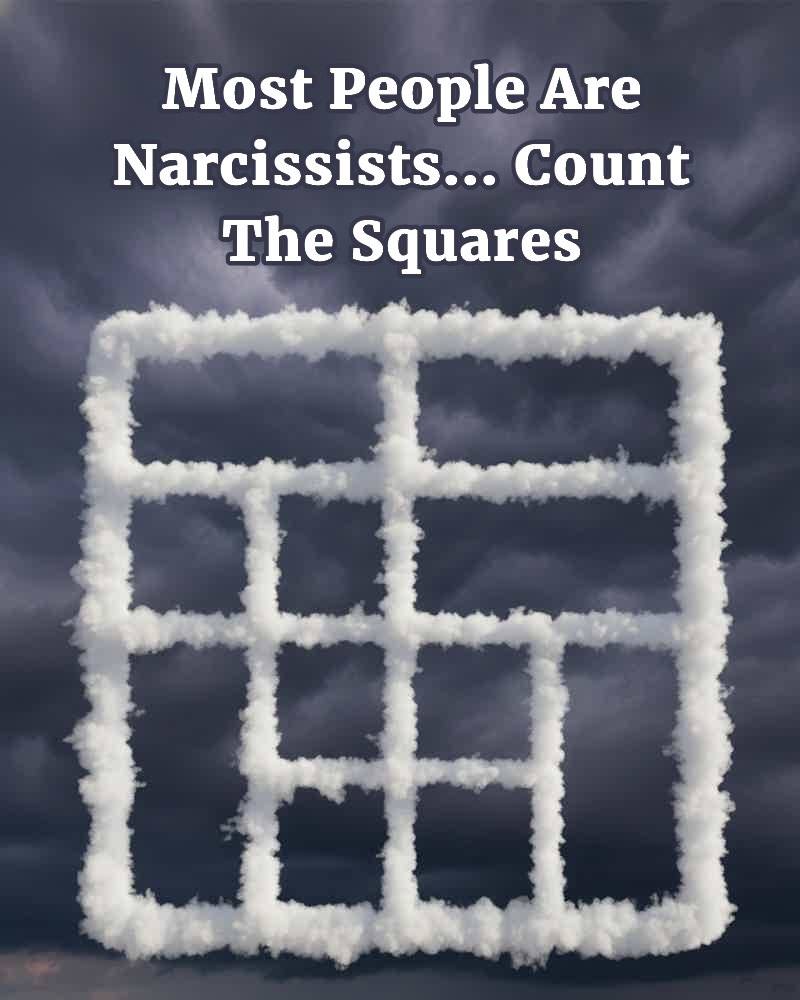
A small visual puzzle has been circulating online, showing nothing more than a cloud-shaped outline filled with a grid of squares. It’s often paired with a dramatic claim such as “Most people are narcissists,” followed by the challenge: “How many squares do you see?”
That attention-grabbing line isn’t based on science. Instead, the puzzle highlights something much more universal and interesting—how our minds naturally interpret what we see.
At first glance, most people notice only the tiny squares within the grid. This is completely normal. Our brains are wired to latch onto the simplest and most obvious shapes before considering the larger structure. The puzzle doesn’t diagnose personality. Rather, it gently demonstrates how human perception works and how easily we form quick conclusions based on initial impressions.
As more people attempt the puzzle, the variety of answers becomes surprising. Some count only the nine small squares. Others begin noticing the medium-sized ones. A few pick up on even larger squares formed by the grid as a whole. Every added layer of observation offers a chance to see something new.
This range of responses highlights a subtle truth: we all interpret visual information differently. Our minds don’t always process the world the same way, even when we’re looking at identical images.
Why the Puzzle Works
Simple challenges like this are effective because they momentarily slow us down. Most people assume they’re done counting quickly, only to realize later they overlooked several hidden forms. That moment of surprise doesn’t reveal ego or intelligence—it reveals how easy it is to rush through things without seeing the full picture.
In many ways, the cloud-shaped border makes the counting even trickier. Its soft, rounded outline distracts from the sharp, geometric lines inside, making the overall structure harder to spot immediately. The puzzle invites us to look again, more intentionally, and notice what we missed.
A Lesson Hidden in the Squares
Even after being shown the correct number of squares, many people react the same way: “How did I miss that?”
That reaction is common—and meaningful.
It reminds us that our first interpretation is not always our most accurate one. Whether it’s a puzzle, a situation, or a person, our minds often jump to fast conclusions. Slowing down, questioning assumptions, and taking a second look can reveal far more than we initially thought.
In our fast-paced world, where information flashes before us constantly, this simple grid becomes more than a puzzle. It’s a gentle reminder about perspective. When we focus too closely on one small detail, we risk missing the larger pattern entirely.
More Than a Brain Teaser
Although it may seem like just an internet game, the puzzle carries a valuable message about how we observe life. It encourages curiosity and reminds us to stay aware not only of what we see, but how we see it.
A cloud-shaped outline filled with squares may appear simple, but the lesson behind it is far bigger: when we expand our perspective and question our first impressions, the world becomes clearer, richer, and more meaningful.